
For YouR Business ·employment law
Employment Lawyers for Business
Navigating the Legal Maze: Robust Employment Law Services for Employers
Navigating UK employment law can be complex for employers, given the ever-changing regulations and wide range of responsibilities. At 360 Law Services, we offer tailored legal advice to fit your unique business needs. Our experienced team blends deep knowledge of employment law with industry expertise to provide comprehensive legal solutions.
We aim to be more than just legal advisors; we’re your strategic partners. Our proactive approach identifies potential legal issues early on, saving you time, reducing costs, and mitigating risks. With us, you can focus on running your business, knowing that all employment-related legal matters are in expert hands.
Our Expertise
Our Employment Law Expertise.
Contracts & Agreements
Crafting robust employment contracts, non-compete clauses, and confidentiality agreements that protect your interests.
Compliance Audits
Assessing your operations to ensure compliance with labour laws, including health and safety, wage and hour regulations, and employment equality.
Dispute Resolution
Expert legal representation in cases of employment disputes, including unfair dismissal claims, discrimination issues, and workplace harassment.
Workplace Policies
Designing and implementing comprehensive HR policies that are legally sound and promote a positive work environment.
Redundancy & Restructuring
Advising on the legal aspects of workforce changes, ensuring that you meet your obligations to your employees.
Employment Tribunals
Providing strong representation in employment tribunals, minimising risks and costs while advocating for your best interests.
Training & Development
Offering in-house training sessions on legal best practices for HR professionals and management teams.
Immigration Compliance
Navigating the legal aspects of employing foreign nationals, including visa applications and right-to-work checks.




Get in touch with us today
Complete our form and we will get back to you straightaway.
Latest News
Employment Law News
-
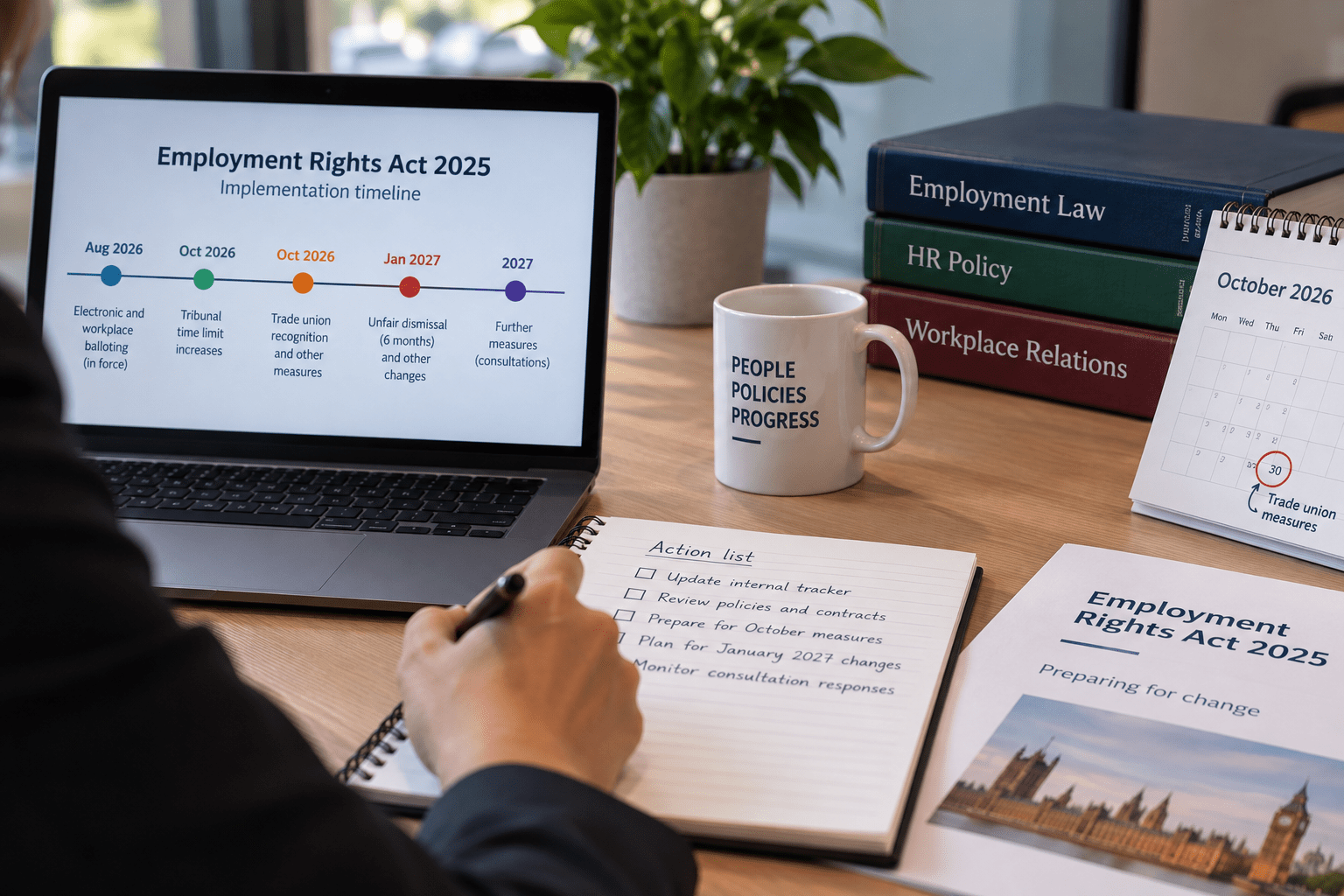
Employment Law Update: Government Confirms Revised Timetable for 2026–2027
The Government published a further update to its implementation timetable for the Employment Rights Act 2025 on 25 August 2026.…
-

Neonatal Leave and Pay Law
The Neonatal Care ( Leave and Pay ) Act 2023, which came into effect on 6 April 2025, introduces significant…
-

Employment Rights Bill 2024: Key Changes for Employers and Employees
The Employment Rights Bill 2024 introduces significant changes to employment law, impacting both employers and employees across the UK. These…
FAQs
Employment Law FAQs.
Unfair dismissal pertains to the reasons for dismissal and whether the employer acted reasonably, while wrongful dismissal is about whether the employer breached the terms of the contract during the dismissal process.
Regular compliance audits and legal consultations can help ensure you are aligned with current laws and regulations.
Redundancy must follow a legally mandated procedure including consultation, fair selection, and offering alternative employment when possible.
A formal internal investigation should be your first step, followed by disciplinary action if necessary. Legal advice is strongly recommended at all stages.
Generally, yes. Changes to an employment contract usually require the agreement of both parties unless a specific flexibility clause exists in the original contract.
Employers must comply with the UK’s data protection laws, which include safeguarding personal data and providing access to it when requested by the employee.
Yes, remote or flexible working arrangements should be outlined in employment contracts and are subject to existing employment laws.
The minimum wage varies depending on age and type of employment. Working hours are generally capped at 48 hours per week unless an opt-out agreement is signed.
Employment tribunals are a type of public hearing between an employee and employer when disputes can’t be resolved internally. Legal representation is advised.
Right-to-work checks and, if applicable, sponsorship under the UK’s points-based immigration system are crucial considerations when employing foreign nationals.
AS FEATURED IN